
Solar Panels For Homes: Understanding Costs, Potential Savings, And Payback Timeframes

Financing Considerations and Long-Term Factors for Solar Panels for Homes: Understanding Costs, Potential Savings, and Payback Timeframes
Financing options for residential solar commonly include outright purchase, loans, leases, and power purchase agreements (PPA) where available. Each method alters initial cash outlay and the distribution of costs and benefits over time. Loan financing can spread capital cost across years and may increase nominal payback periods depending on interest rate; leases or PPAs often reduce or eliminate up-front expenditure but change the ownership of the system and the flow of savings. Comparing lifecycle outcomes across financing structures requires modelling cash flows, tax implications where relevant, and any policy incentives separately for accuracy.
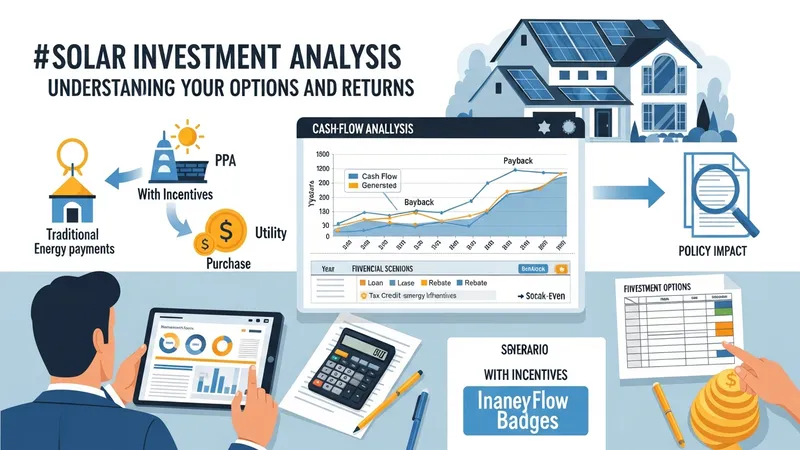
Policy mechanisms such as tax credits, rebates, or export compensation frameworks can significantly influence net project economics where they exist. These instruments vary widely by jurisdiction and may change over time; therefore, sensitivity to policy shifts is prudent when estimating long-term payback. In many analyses, incentives are treated as incremental reductions in net capital cost or as line items in annual cash flows. Modellers often test scenarios with and without current incentive levels to show how dependent payback is on policy support.
Long-term ownership considerations include warranty coverage, expected maintenance, and replacement timing for components such as inverters or batteries. Manufacturer warranties for panels often cover performance for multiple decades, while inverter warranties are typically shorter; battery warranties commonly specify cycle or time limits. Accounting for end-of-life component replacement costs in multi-decade financial models affects net savings and may alter the relative attractiveness of storage additions or higher-cost components claimed to improve longevity.
When interpreting model results, it is helpful to present ranges and clarify key assumptions that drive outcomes. Sensitivity tables or tornado charts that show the relative impact of changes in electricity price, system production, or financing cost can guide non-prescriptive decisions about whether further detailed study is warranted. Continued reading of the earlier sections can help readers match assumptions to their local context and refine estimates for their specific situation.