
Used Industrial Tools: Guidelines For Safe Inspection And Maintenance

Used industrial tools encompass a wide range of equipment that has seen prior service in manufacturing, construction, laboratory, or maintenance environments. Guidelines for safe inspection and maintenance describe methods to evaluate condition, detect wear or damage, verify functional performance, and plan upkeep actions. These guidelines typically address visual inspections, operational tests, component-level checks, documentation practices, and safety considerations specific to previously owned or reconditioned items. The concept centers on reducing unexpected failures, preserving operator safety, and maintaining functional reliability while acknowledging that used tools may present variable histories and condition levels.
Guidelines for these tools often emphasize systematic, repeatable approaches rather than ad hoc checks. That includes defined inspection intervals, standardized checklists, criteria for acceptance or repair, and recordkeeping that captures prior findings and remedial steps. The scope of guidance may span handheld tools, power-driven machinery, lifting devices, and precision instruments, and it can integrate both simple visual checks and more advanced non-destructive testing where needed. Language in guidelines commonly frames findings as conditions that may require action rather than definitive judgments about usability.
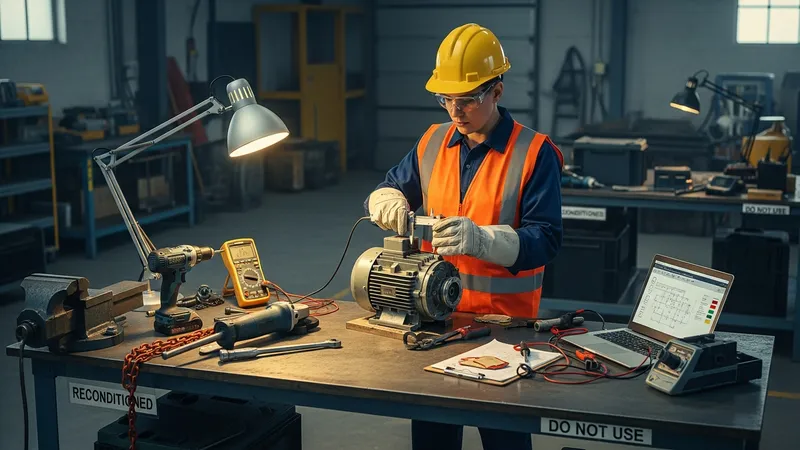
- Handheld and power tools — descriptive checks may include cord integrity, switches, guards, and observable wear on housings and fasteners.
- Lifting and material-handling equipment — examples include hoists, pallet jacks, and slings; inspection focuses on load-bearing components, hooks, and mechanical brakes.
- Measurement and diagnostic instruments — examples include calipers, multimeters, and pressure gauges; assessments may involve calibration verification and accuracy tests.
Inspection protocols typically begin with a visual sweep to identify corrosion, deformation, missing parts, or contamination. Visual findings may prompt more detailed functional tests such as operating a device under no-load and load conditions, checking electrical insulation resistance, or verifying mechanical travel and clearances. For many used items, an initial comprehensive assessment may be followed by a risk-based inspection schedule where frequency depends on criticality and prior condition. Documentation of findings and photographic records often support later maintenance decisions and traceability.
Maintenance approaches may vary from simple cleaning, lubrication, and fastener torque checks to component replacement and refurbishment. Preventive maintenance schedules often reference manufacturer recommendations where available, but for used tools those recommendations may need adaptation based on observed wear and usage history. Condition-based maintenance, where actions are triggered by measured parameters (e.g., vibration, temperature, or calibration drift), can be an alternative when baseline performance data are obtainable. Parts availability and compatibility should be considered when planning repairs for older or discontinued models.
Performance evaluation for used instruments and machines commonly uses functional tests and measurable tolerances to determine acceptability. For precision instruments, calibration against a known standard may establish whether an item meets operational criteria. For mechanical equipment, load-testing, cycle testing, or runtime monitoring can indicate remaining useful life trends. When manufacturers’ specifications are not available, comparative tests against similar functioning units or industry-accepted tolerances often serve as pragmatic references. Any performance assessment should state uncertainty and test conditions clearly.
Recordkeeping and long-term upkeep planning typically include service logs, inspection checklists, repair histories, and parts replacement schedules. These records may be maintained digitally or on paper and often form the basis for decisions about continued use, refurbishment, or retirement. Traceability can reduce redundant inspections and help identify recurring failure modes. Over time, aggregated records can inform lifecycle planning by highlighting components that often require replacement and by indicating when repair costs may exceed the value of continued service.
In summary, guidelines for safe inspection and maintenance of used industrial tools frame a structured approach to evaluating condition, ensuring functionality, and planning upkeep without prescriptive mandates. They often combine visual checks, functional testing, maintenance scheduling, performance verification, and documentation practices tailored to the type and criticality of the equipment. The next sections examine practical components and considerations in more detail.