
Solar Panels For Homes: Understanding Costs, Potential Savings, And Payback Timeframes

Cost Components and Typical Price Ranges for Solar Panels for Homes: Understanding Costs, Potential Savings, and Payback Timeframes
Up-front costs for residential solar systems generally break down into equipment, installation labor, permitting and inspection, and any necessary site upgrades. Equipment includes modules, inverters, racking, wiring, and sometimes batteries; installation labor covers mounting, electrical connections, and commissioning. Typical per-watt pricing often varies by region, installer overhead, and equipment choices. When performing cost estimates, it is useful to separate hard costs (hardware) from soft costs (permits, design, interconnection) and to account for potential additional costs such as structural reinforcement or electrical panel replacement. Conservative budgeting may avoid underestimating soft costs.
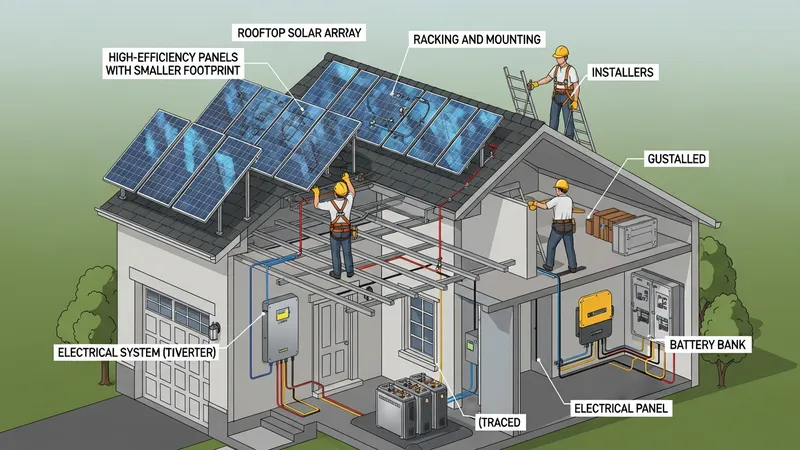
Component selection can influence both initial price and expected operational profile. Higher-efficiency modules can reduce roof area required for a given output but may carry a premium; string inverters are often less costly than microinverters or optimisers but may perform differently under partial shading. Battery chemistry and capacity choices affect capital cost and depth-of-discharge patterns, which in turn influence lifetime throughput. When comparing costs, it can be informative to model levelized cost of energy from the system over a multi-decade horizon while including anticipated replacements and maintenance.
Installation logistics and local regulations may add variability to total project price and timeline. Permit fees, interconnection application processes, and utility inspection requirements can contribute to soft costs and delay system operation. If roof work or conduit runs are complex, labor hours may increase. Accurate site assessments that include shade analysis, roof condition evaluation, and electrical panel checks often reduce the likelihood of unplanned expenses during installation. Including contingency allowances for unforeseen site issues is a common practice in realistic budgeting.
Detailed cost modelling typically uses scenario inputs such as system size, expected annual production, component degradation, and financing terms. Sensitivity analyses that vary electricity price inflation, system uptime, or inverter replacement timing can clarify how sensitive payback timeframes are to each factor. Presenting a range of outcomes—such as shorter and longer payback scenarios—helps set expectations and highlights which variables most strongly affect financial performance without implying certainty.