
Minimally Invasive Knee Surgery: How Procedures Are Performed And Who May Benefit

Outcomes, risks, and decision-making considerations for minimally invasive knee surgery
Reported outcomes for less invasive knee approaches vary by procedure and patient selection. In general, targeted interventions for focal pathology often yield symptom relief and functional improvement when the underlying problem is appropriately matched to the technique. Outcomes are influenced by disease extent, patient health status, and adherence to postoperative rehabilitation. Clinicians typically frame expected improvements cautiously, noting that results may differ among individuals and that some cases may require conversion to more extensive procedures if intraoperative findings indicate broader disease.
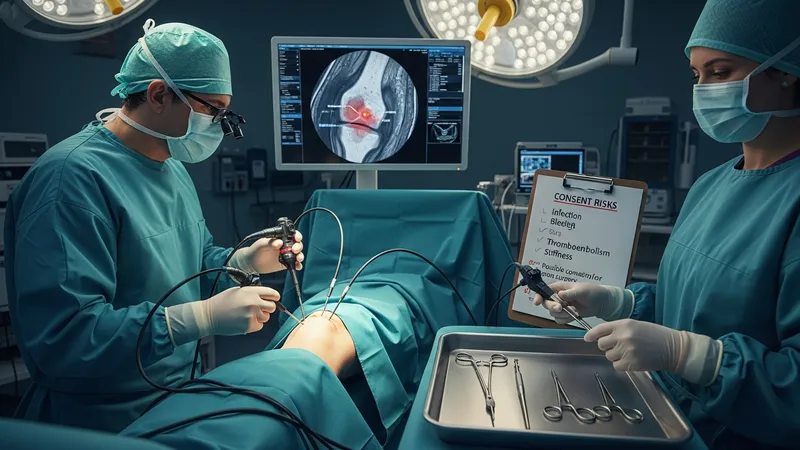
Risks associated with smaller-access techniques are similar in type to those of open procedures but can differ in frequency or presentation. Potential concerns include infection, bleeding, thromboembolic events, persistent pain, stiffness, or need for subsequent surgery. Specific risks may relate to the procedure—for instance, implant issues in partial replacement or graft failure in ligament reconstruction. Surgeons discuss these potential outcomes as part of informed consent, emphasizing individualized risk assessment rather than absolute predictions.
Decision-making often balances the potential advantages of reduced soft-tissue trauma against the need for adequate exposure to address the pathology completely. For example, a focal meniscal tear in an otherwise healthy joint may be amenable to arthroscopic repair, whereas widespread degenerative change across compartments may be more appropriately managed with broader reconstructive options. Considerations such as patient activity goals, comorbid conditions, and prior interventions commonly factor into the selection process, with contingency plans discussed if intraoperative findings differ from preoperative imaging.
Clinicians and patients may use a collaborative approach to weigh options, focusing on objective findings and realistic expectations. When less invasive techniques are chosen, clear perioperative planning, appropriate instrumentation, and coordinated rehabilitation are important elements that can support recovery. Rather than promising specific outcomes, this approach frames choices in probabilistic terms and seeks alignment between clinical findings, patient goals, and the selected surgical strategy.